
Archival Photo Storage-Choosing The Best Enclosure
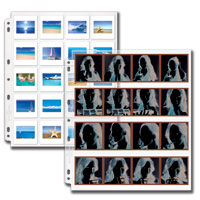 Your valuable photo collection is vulnerable to dangerous threats including environmental contaminants, water, fingerprint oils and PVC plastics. We have products and solutions to protect and preserve your photos for many years to come. University Products offers a wide variety of archival photo products that will help you with your photo restoration and preservation projects.
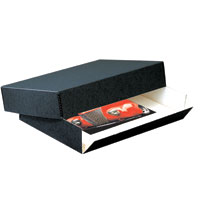
Included in these products is our line of custom archival boxes that have passed the Image Permanence Institute’s Photo Activity Test. The Photo Activity Test (PAT) evaluates photo-storage and display materials and how they interact with photographic materials. This test can determine the archival quality of materials including, but not limited to, paper, boards, and plastics. The components of such materials are also tested. These may include inks, tapes, paints, and labels.
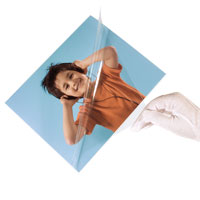 Over 8,000 samples have undergone the PAT test in more than the two decades of the test. This test is administered by stacking materials in contact with image interaction and stain detectors. These stacks are then placed in a humidity and temperature-controlled chamber to simulate aging. This climate-altered chamber stays at a temperature of 70 degrees centigrade and 80% relative humidity. The incubation process of each sample takes place over the course of a 15-day period. Test results are sent to clients and manufacturers within 4-6 weeks after the test is administered.
In addition to our line of custom archival boxes, University Products offers photo pages and sleeves that have passed the PAT. Per the recommendation of the National Archives, polyester, polyethylene, and polypropylene enclosures provide the most stable and non-damaging storage environment for archiving your photos. Unlike PVC plastics, these materials are inert and do not stick to your photographs.
At one time, it was believed that photographs stored in buffered enclosures might be adversely affected by buffering. This is no longer believed to be true except for a couple of specific types of photographs. With dye transfer prints and cyanotypes, unbuffered enclosures should be used. The image of both print types can be harmed by alkalinity. University Products’ Photo Textile Interleaving Tissue is a suitable solution for interleaving between photographs when buffering is not desired.